

 By
By Few textiles in India capture the soul of tradition and artistry quite like the Gujarati Bandhani saree. Known for its intricate patterns, vibrant colors, and deep cultural symbolism, Bandhani is more than just a craft — it’s an expression of heritage passed down through generations. From the bustling lanes of Jamnagar and Bhuj to the skilled hands of artisans in Kutch, each Bandhani saree tells a story woven in dots, folds, and dye.
A Heritage of Dots and Dreams
The word Bandhani comes from the Sanskrit word ‘Bandh’, meaning ‘to tie’. True to its name, the art involves tying thousands of tiny knots on fabric before dyeing it to create exquisite designs. This traditional tie-and-dye technique is believed to date back over 5,000 years, with early evidence found in the ancient city of Harappa.
In Gujarat, Bandhani is not just a textile — it’s a part of life’s milestones. From weddings to festive celebrations, these sarees symbolize good fortune, fertility, and spiritual energy. Every pattern carries meaning: circular motifs represent the sun, wavy lines evoke flowing water, and dotted clusters are said to bring prosperity.
The Making of a Bandhani Masterpiece
Creating a Bandhani saree is a slow and soulful process that blends patience with precision. It starts with soft fabrics like silk, cotton, or georgette, which are first washed and bleached. The artisan then marks the fabric with designs — sometimes freehand, sometimes using block patterns.
Next comes the most labor-intensive stage: the tying. Using thin cotton threads, skilled women pinch and tie thousands of tiny sections, each representing a dot in the final pattern. The tighter the knots, the sharper the design. Once tied, the fabric is carefully dyed in layers, often multiple times, to achieve the trademark multicolor effect.
After drying, the knots are untied, revealing breathtaking patterns of dots and motifs — a moment of magic for every artisan. The beauty of Bandhani lies in its unpredictability; no two sarees are ever exactly the same.
Colors That Speak Tradition
Gujarat’s Bandhani sarees are a celebration of color. Each hue carries emotion and cultural significance.
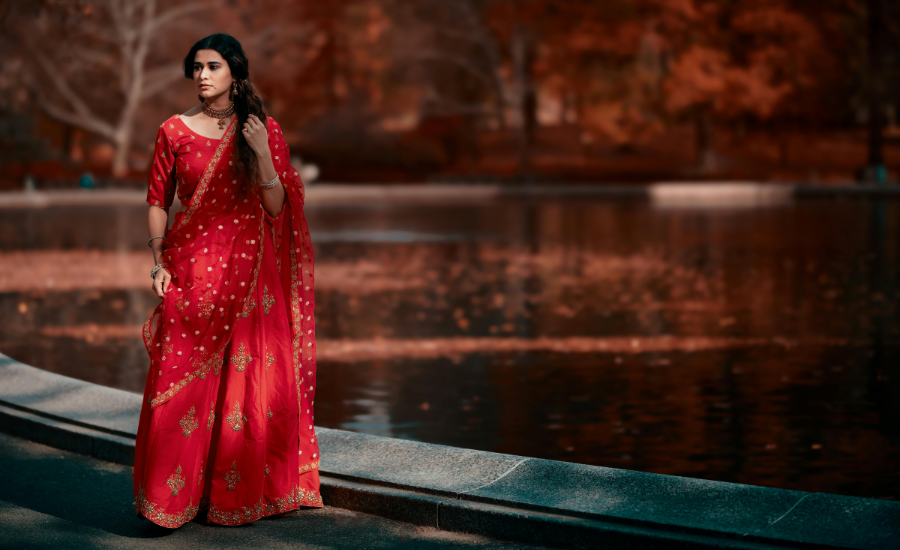
- Red Bandhani saree symbolizes love and is often worn by brides.
- Yellow stands for spring and new beginnings.
- Green represents fertility and prosperity.
- Black, though rare, conveys elegance and mystery.
The dyes used are traditionally natural, extracted from plants, flowers, and minerals — a sustainable approach that modern designers are bringing back into vogue.
Regional Signatures of Gujarat’s Bandhani
Different regions of Gujarat bring their own touch to the craft. Jamnagar is renowned for its fine, delicate Bandhani work with vibrant contrasts. In Bhuj and Kutch, artisans create bold geometric designs using natural dyes and organic cotton. The city of Mandvi is famous for its Gharchola Bandhani — a ceremonial saree often woven with zari (gold thread) and gifted to brides as part of their trousseau.
Each area’s version of Bandhani carries unique motifs and techniques, reflecting local customs and inspirations. Together, they form a rich tapestry of Gujarati artistry.
Bandhani in Modern Fashion
While rooted in tradition, Bandhani continues to evolve beautifully with time. Contemporary designers are blending this ancient art with modern silhouettes — from Bandhani sarees with minimalistic patterns to chic Bandhani dupattas, lehengas, and even Indo-western outfits.
Fashion-forward brides and global consumers alike are rediscovering Bandhani as a sustainable, handmade luxury. The tie-and-dye technique has even found its way into global runways, where designers celebrate it as an emblem of Indian craftsmanship.
Preserving a Living Legacy
Behind every Bandhani saree is the labor and love of artisans — many of whom have honed their craft for decades. Supporting Bandhani means preserving their livelihoods and keeping a centuries-old tradition alive. As consumers become more mindful about the origins of their clothing, choosing authentic hand-tied Bandhani becomes both a style statement and an act of cultural preservation.
In Conclusion
The Gujarati Bandhani saree is not just attire; it’s wearable art. Each knot, each hue, each pattern embodies the patience and passion of the artisan who created it. Whether draped on a bride or displayed in a designer boutique, Bandhani continues to enchant with its blend of heritage, skill, and timeless beauty — a living testament to India’s rich textile legacy.