

 By
Hardwood floors can last for decades, but everyday wear and tear eventually take their toll. Scratches, fading, discoloration, and damaged boards can make even a beautiful floor look tired. When that happens, homeowners face an important question: Should you refinish your existing hardwood floors or replace them entirely?
The right choice depends on the floor’s condition, the extent of the damage, and your long-term goals. In many cases, refinishing can restore the beauty of existing hardwood without the expense of a complete replacement. However, some floors require professional repairs or new flooring to achieve lasting results.
Here’s how to determine the best approach for your home.
1. When Hardwood Floor Refinishing Is the Better Choice
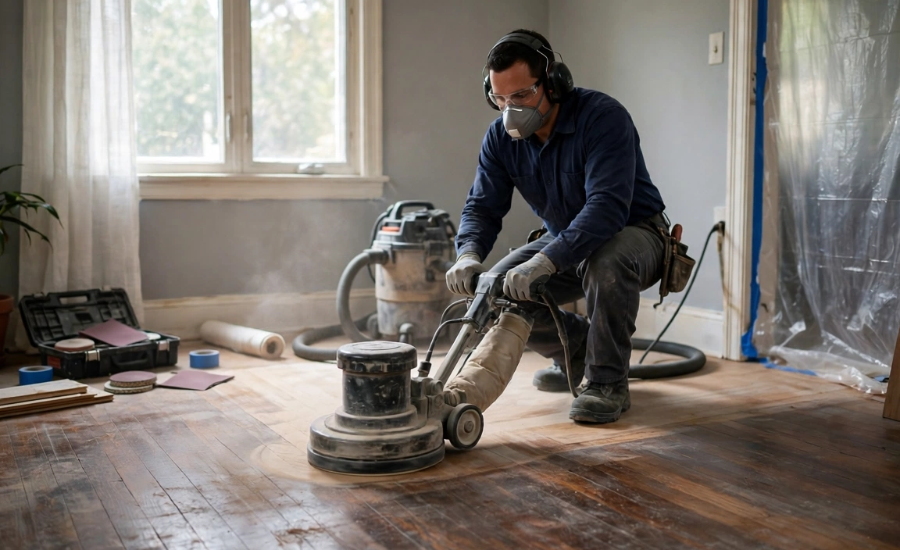
Refinishing is often an excellent option when the hardwood remains structurally sound but has lost its original appearance. Surface scratches, worn finishes, minor scuff marks, and faded colors are common problems that may be addressed through professional refinishing.
The process typically involves sanding away the existing finish, preparing the wood surface, and applying a new stain, protective coating, or both.
Depending on the wood species and your design preferences, refinishing can also change the floor’s appearance. You might choose a lighter natural finish, a warm traditional stain, or a darker color to complement your interior.
Consider refinishing if:
- Your floors have surface scratches or a dull finish.
- The wood remains solid and structurally sound.
- You want to refresh the color or appearance.
- The existing boards have enough thickness for additional sanding.
- You prefer to preserve your original hardwood flooring.
Before proceeding, consult experienced flooring professionals to determine whether your floors can withstand the refinishing process.
2. When Hardwood Flooring Repair Is Necessary
Not every flooring problem can be solved with sanding and a fresh coat of finish. Loose boards, deep gouges, localized water damage, and persistent squeaking may require targeted repairs before refinishing begins.
Professional hardwood flooring repair focuses on identifying the underlying problem and addressing it appropriately.
For example, damaged boards may need to be replaced individually, while loose sections may require fastening or other corrective work. Moisture-related damage should be investigated carefully to prevent recurring problems.
Repairing isolated areas can often preserve the majority of your existing floor, making it a practical alternative to replacing the entire surface.
Consider repairs if:
- A few boards are cracked, split, or badly damaged.
- Certain areas feel loose or unstable.
- Water has damaged a limited section of flooring.
- The floor has localized gaps or other installation-related issues.
The key is to address the cause of the damage rather than simply covering up its visible signs.
3. When Hardwood Flooring Installation Is the Smarter Investment
Sometimes, hardwood refinishing and repairs are no longer sufficient. If the flooring has extensive water damage, widespread structural deterioration, or boards that are too thin for further sanding, replacement may be the more reliable solution.
New hardwood flooring installation also makes sense when you’re redesigning your home and want a different wood species, board width, color, or overall style.
Professional installers assess the subfloor, moisture conditions, and room requirements before recommending suitable flooring. Proper preparation and installation are essential for helping prevent future problems, including uneven surfaces and moisture-related movement.
Consider replacement if:
- Large areas of flooring have severe or recurring damage.
- The wood has already been sanded too many times.
- Boards are extensively warped or deteriorated.
- You want to change the flooring material or layout.
- Repairing the existing floor would be impractical.
Although replacement generally requires a larger investment, it can provide a fresh start when the existing flooring has reached the end of its useful life.
4. Refinishing vs. Replacement: What Should You Compare?
Before making a decision, consider these important factors.
Cost: Refinishing is generally less expensive than replacing an entire hardwood floor, provided extensive repairs aren’t necessary. Actual costs depend on the floor’s condition, room size, and selected finish.
Time: Refinishing usually avoids the additional removal and installation work associated with replacement. However, sanding, coating, drying, and curing still require time.
Appearance: Refinishing preserves the existing wood, while replacement offers greater flexibility in selecting new materials and styles.
Longevity: Both options can provide lasting results when the work is performed correctly. The outcome depends on material quality, installation or refinishing methods, and ongoing maintenance.
Environmental impact: Preserving usable hardwood can reduce waste and the demand for new materials, although the overall impact depends on the products and processes involved.
Comparing these factors with a professional assessment will help you make an informed decision.
5. How to Make Your Hardwood Floors Last Longer
Regardless of whether you refinish, repair, or replace your flooring, proper maintenance helps protect your investment.
Follow these simple practices:
- Sweep or vacuum regularly to remove dirt and abrasive particles.
- Clean with products recommended for your specific floor finish.
- Wipe up spills promptly to minimize moisture exposure.
- Place protective pads beneath furniture legs.
- Use rugs in high-traffic areas where appropriate.
- Address loose boards, unusual movement, and moisture problems early.
Routine care can help maintain the floor’s appearance and reduce avoidable wear over time.
Bring Your Old Hardwood Floors Back to Life
Deciding whether to refinish or replace your hardwood floors doesn’t have to be complicated. If the wood is structurally sound, refinishing may restore its beauty at a reasonable cost. When damage is localized, hardwood flooring repair can help preserve the existing surface. And when the floor is beyond restoration, professional hardwood flooring installation offers an opportunity to create a fresh, durable foundation for your home.
Start with a professional assessment. An experienced flooring specialist can evaluate your existing floors, explain your options, and recommend a solution that balances appearance, durability, and budget.